
Why Enclosed Cooling Systems Are Not Contamination-Free
Data Halls operating with enclosed or recirculating air-conditioning systems are often assumed to be protected from external airborne contamination.
Unlike economised cooling systems, where outside air may be introduced directly into the Data Hall, an enclosed system predominantly recirculates air already within the controlled environment.
However, enclosed does not mean contamination-free.
In fact, where there is limited introduction of filtered outside air, particulate generated inside the Data Hall can remain within the environment and be repeatedly recirculated through both the cooling system and critical IT equipment.
Where Does the Contamination Come From?
Even in a well-maintained Data Hall, particulate is continuously being introduced or generated internally.
Typical sources include:
- People
Every person entering a Data Hall introduces contamination.
Clothing fibres, skin particles, hair, footwear debris and dust transferred from other areas can all enter the environment.
The level of contamination can increase significantly during maintenance periods when engineers, contractors and installation teams are working within the room.
- Cardboard and Packaging
Cardboard should ideally be kept outside controlled Data Hall environments.
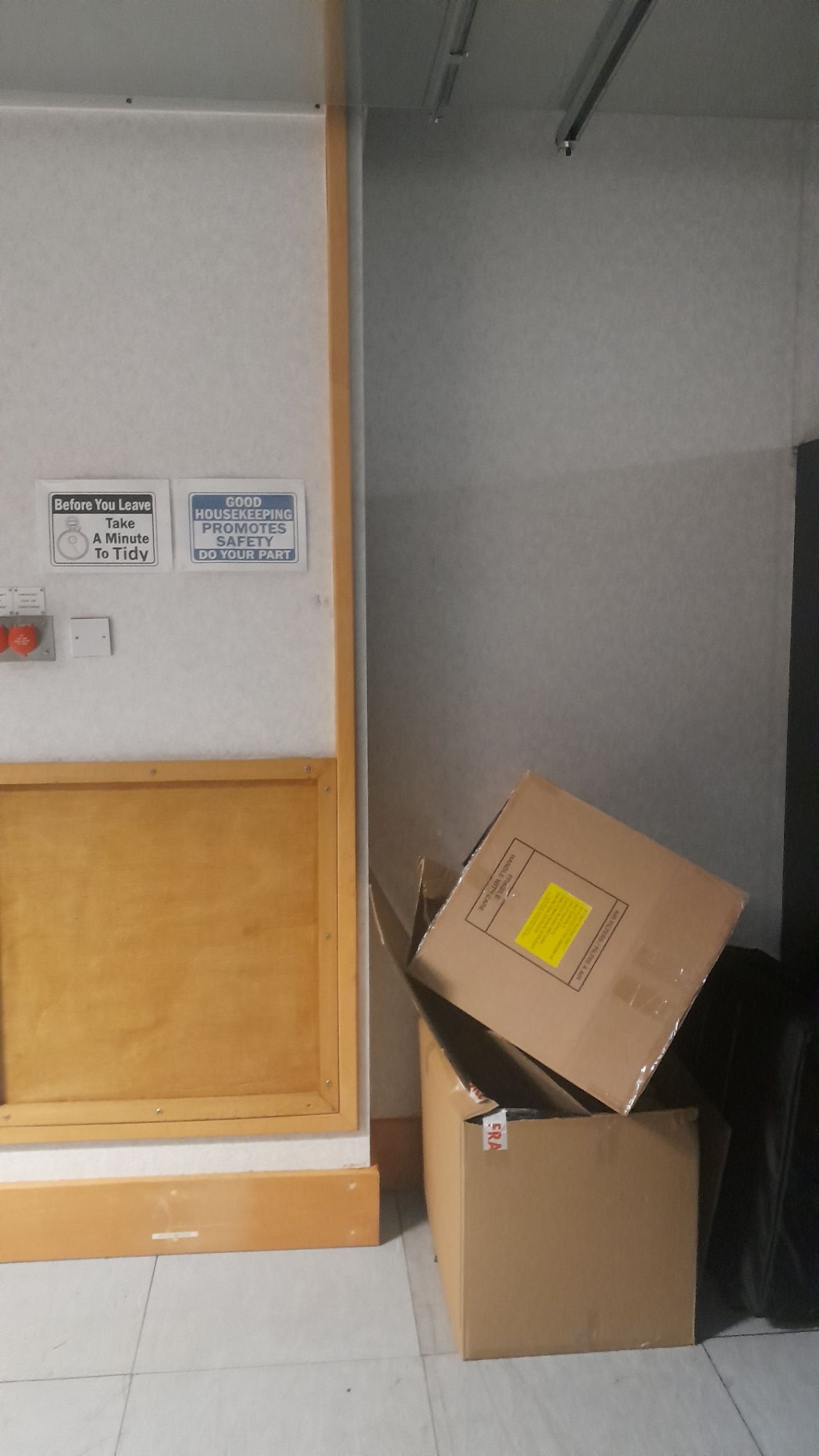
Boxes and packaging materials can release significant quantities of cellulose fibres and fine particulate when handled, opened or moved.
New IT equipment may therefore introduce contamination before it has even been installed.
This is potentially one of the most significant contamination sources.
Drilling, cutting, sanding, ceiling work, raised-floor alterations and general construction activity can generate large quantities of fine particulate.
Materials can include:
- Gypsum/plaster dust
- Concrete and cement particulate
- MDF and timber fibres
- Mineral insulation fibres
- Metal particulate
- Ceiling tile material
- Cable installation debris
- Phenolic Foam. Danger
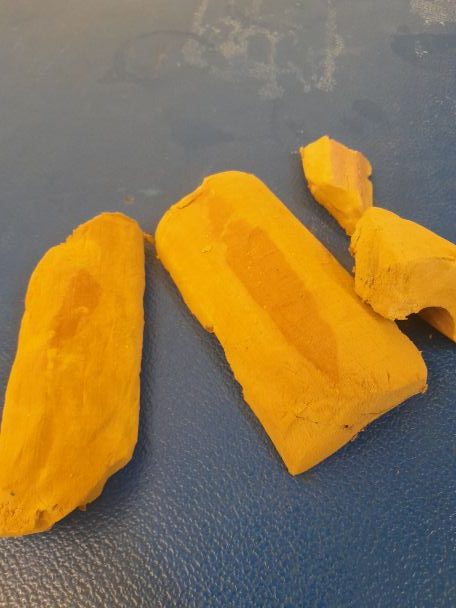
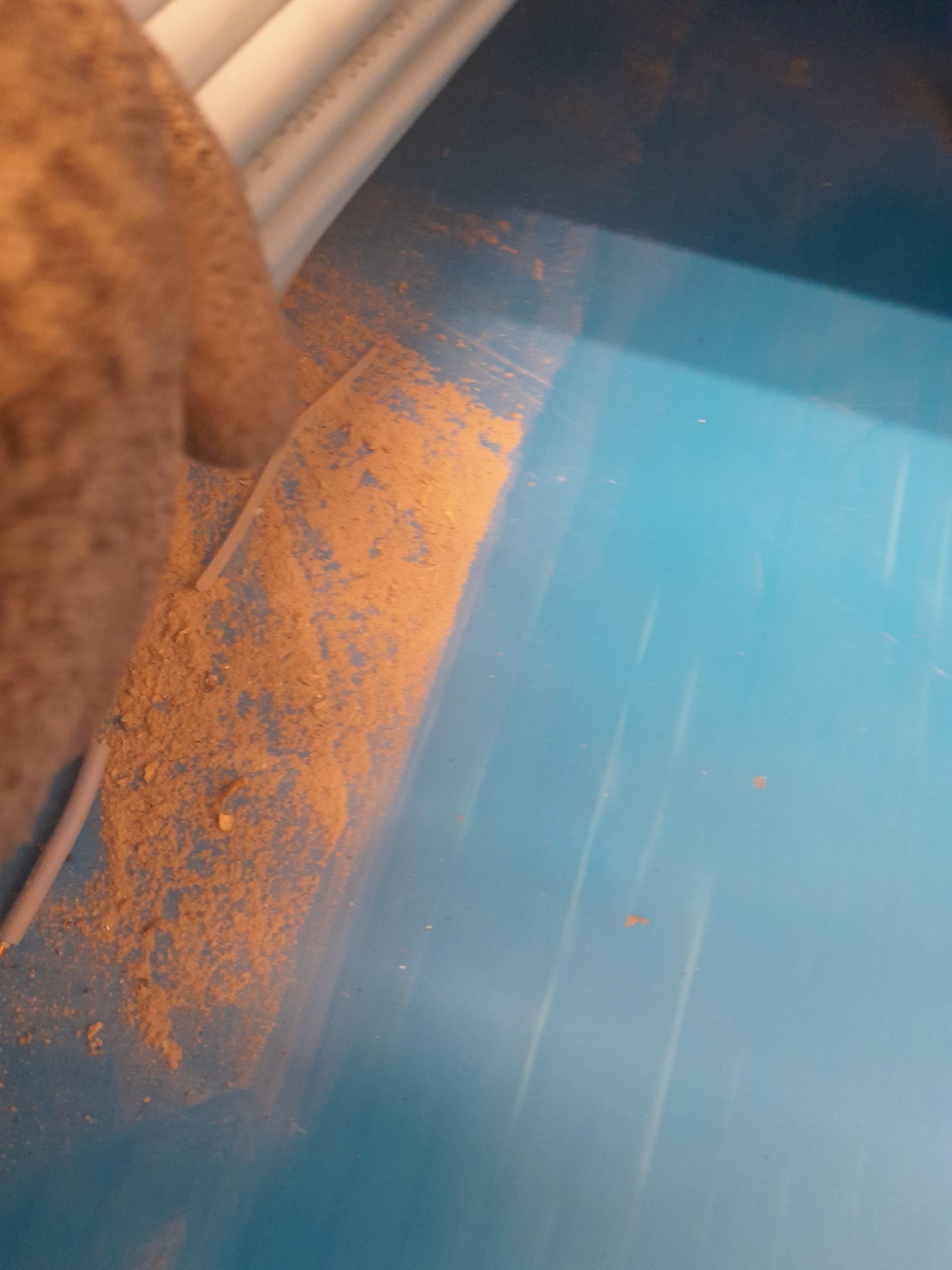
The visible dust is only part of the problem.
Fine particles can become suspended in the Data Hall airflow and migrate considerable distances from the original work area. Post construction/refurbishment cleaning and testing to ISO Class 8 is a must…
- CRAC/CRAH and Air-Conditioning Components
The cooling system itself can potentially become a source of contamination.
A good example is drive-belt wear within certain air-conditioning units.
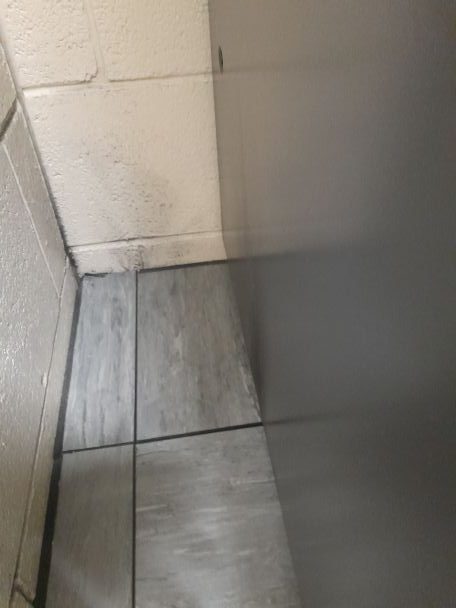
As belts wear, fine rubber or polymer particulate can be generated. Where the cooling system supplies air into a raised-floor plenum, this contamination can accumulate beneath the floor before being distributed through floor grilles into the Data Hall.
The source of contamination is therefore internal — and the cooling system becomes the mechanism distributing it.
- Raised-Floor Voids
The floor void can become a significant particulate reservoir.
Dust, cable debris, installation waste and historic contamination can accumulate beneath raised floors for many years.
Where the void is also being used as a supply-air plenum, airflow can disturb deposited particulate and transport it back into the occupied Data Hall.
A floor void that looks relatively clean close to an access tile may not represent conditions deeper beneath the floor.
- IT Equipment Itself
Servers, switches, storage equipment and other electronics continuously move substantial volumes of air.
Cooling fans pull airborne particulate through the equipment.
Some contamination passes through. Some deposits on:
- Fan blades and guards
- Heat sinks
- PCBs
- Power supplies
- Internal surfaces
- Filters, where fitted
As contamination builds, airflow through equipment can become restricted and heat-transfer efficiency can deteriorate.
Fine particulate deposited on electronic components can also become more significant when combined with elevated humidity or chemically reactive contaminants.
- Cleaning Activities
Ironically, inappropriate cleaning can itself introduce contamination.
Domestic vacuum cleaners, feather dusters, dry sweeping and unsuitable cloths can redistribute fine particulate rather than remove it.
Cleaning chemicals can present another risk.
Some products may contain volatile compounds, leave residues or contain chemicals that are unsuitable for use around sensitive electronic equipment.
Data Hall cleaning therefore needs to be treated as contamination removal, rather than conventional office cleaning.
The Recirculation Problem
The important difference with an enclosed cooling system is what happens after contamination has entered the environment.
Consider a particle generated during drilling work.
It becomes airborne.
The cooling airflow transports it across the Data Hall.
It may then be:
drawn into a server → exhausted into the hot aisle → returned to the cooling system → supplied back into the Data Hall.
If the particle is not captured by filtration or deposited onto a surface, the cycle can continue.
This creates an important principle:
An enclosed Data Hall does not necessarily prevent contamination. It can contain and recirculate it.
Why Air-Conditioning Filters Do Not Solve Everything
A common assumption is that CRAC or CRAH filters will remove the contamination.
That depends heavily on the filtration system.
Filters have different efficiencies across different particle-size ranges. A filter designed primarily to protect cooling coils and mechanical components should not automatically be assumed to provide the level of particulate control associated with a cleanroom HEPA filtration system.
Filter condition is also important.
Incorrect installation, damaged filter media, poor seals or bypass around filter frames can allow particulate to avoid the filter altogether.
The presence of air-conditioning filtration therefore does not, by itself, demonstrate that the Data Hall has controlled airborne particulate levels.
Settled Dust Can Become Airborne Again
Another important issue is resuspension.
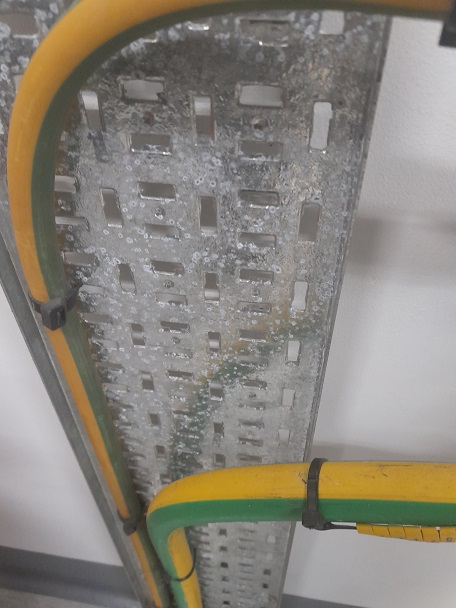
Particulate that has settled onto floors, cable trays, cabinet tops, equipment or within the floor void has not necessarily been permanently removed from the environment.
It is simply deposited.
Airflow disturbance, maintenance work, opening floor tiles, moving equipment or even foot traffic can return this particulate to the air.
This is why contamination control needs to address both airborne particulate and deposited particulate.
You Cannot Reliably Assess This Visually
One of the biggest problems with Data Hall contamination is that the most relevant particulate may not be visible.
A Data Hall can look exceptionally clean while still containing elevated concentrations of fine airborne particles.
Conversely, visible dust on a surface tells us that contamination has been present, but does not quantify current airborne particle concentrations.
This is where particle measurement becomes valuable.
ISO 14644-1 and Data Hall Contamination
ISO 14644-1 provides a recognised methodology for classifying air cleanliness by particle concentration.
For Data Halls where a defined particulate cleanliness level is required, testing provides objective evidence rather than relying on visual inspection.
For example, ISO 14644-1 Class 8 testing can establish whether airborne particle concentrations are within the specified classification limits at the time of testing.
However, there is an important distinction:
Passing an airborne particle test does not mean every surface within the Data Hall is clean.
For technical Data Hall cleaning, the objective should therefore be broader:
Control airborne particulate while also removing deposited contamination from accessible surfaces and contamination reservoirs.
Contamination Control Should Start at the Source
The most effective strategy is not simply to clean contamination after it has spread.
It is to prevent its release in the first place.
This can include controlling packaging, using contamination-control mats at entrances, managing contractor activities, protecting live IT equipment during construction, using suitable HEPA-filtered extraction, controlling drilling and cutting, maintaining cooling equipment and establishing appropriate cleaning procedures.
Where intrusive construction or refurbishment is taking place around operational IT equipment, temporary containment, HEPA air scrubbers and controlled positive or negative pressure arrangements may also be appropriate.
Monitor the Environment, Not Just the Cooling System
Temperature and humidity are routinely monitored within modern Data Halls.
Particulate concentration is monitored far less frequently.
Yet the servers themselves depend upon the cleanliness of the air passing through them.
Periodic ISO 14644-1 testing provides a valuable snapshot of environmental conditions. For particularly sensitive or high-density environments, continuous particle monitoring can provide another layer of information by identifying changes and contamination events as they occur.
A sudden increase in particle concentration could potentially highlight construction activity, filter problems, abnormal equipment wear or another contamination source before significant deposition occurs.
Conclusion
Enclosed air-conditioning systems remove one major contamination pathway: the deliberate introduction of large quantities of outside air.
But they do not remove the contamination risk.
In an enclosed Data Hall, the contamination source may simply move from outside the building to inside the room.
People, packaging, construction activities, cooling equipment, raised-floor voids and maintenance work can all generate particulate.
Once released, the Data Hall’s high-volume airflow can distribute that contamination throughout the environment and repeatedly pass it through critical IT equipment.
The question therefore should not simply be:
“Is outside air entering the Data Hall?”
It should be:
“What particulate is being generated inside the Data Hall, where is it accumulating, and what is the airflow doing with it?”
For mission-critical environments, contamination control should be considered part of the operational management of the Data Hall — alongside temperature, humidity, airflow, power and physical security.
Because a closed-loop cooling system may be closed to the outside environment, but it is not closed to contamination generated within.
IT Cleaning Ltd — Specialist Data Centre and Critical IT Environment Cleaning, Contamination Control and ISO 14644-1 Testing.